Assessments and sign-off
Assess people properly, then sign them off with confidence. Staff self-assess against clear criteria, assessors observe and record evidence, and a competency can take more than one attempt with feedback. Formative and summative sign-off is captured with a timestamped record of who signed what, and when.
Why assessment matters
Competency assessment establishes whether someone can perform safely and to the standard required by their role. It gives the organisation a clear basis for sign-off and provides evidence that assessment decisions have been made through an agreed process.
Each assessment also contributes to the staff member's individual development record. Completed competencies, sign-off history and renewal dates build into a portfolio they can export, retain and share as evidence of their continuing development.
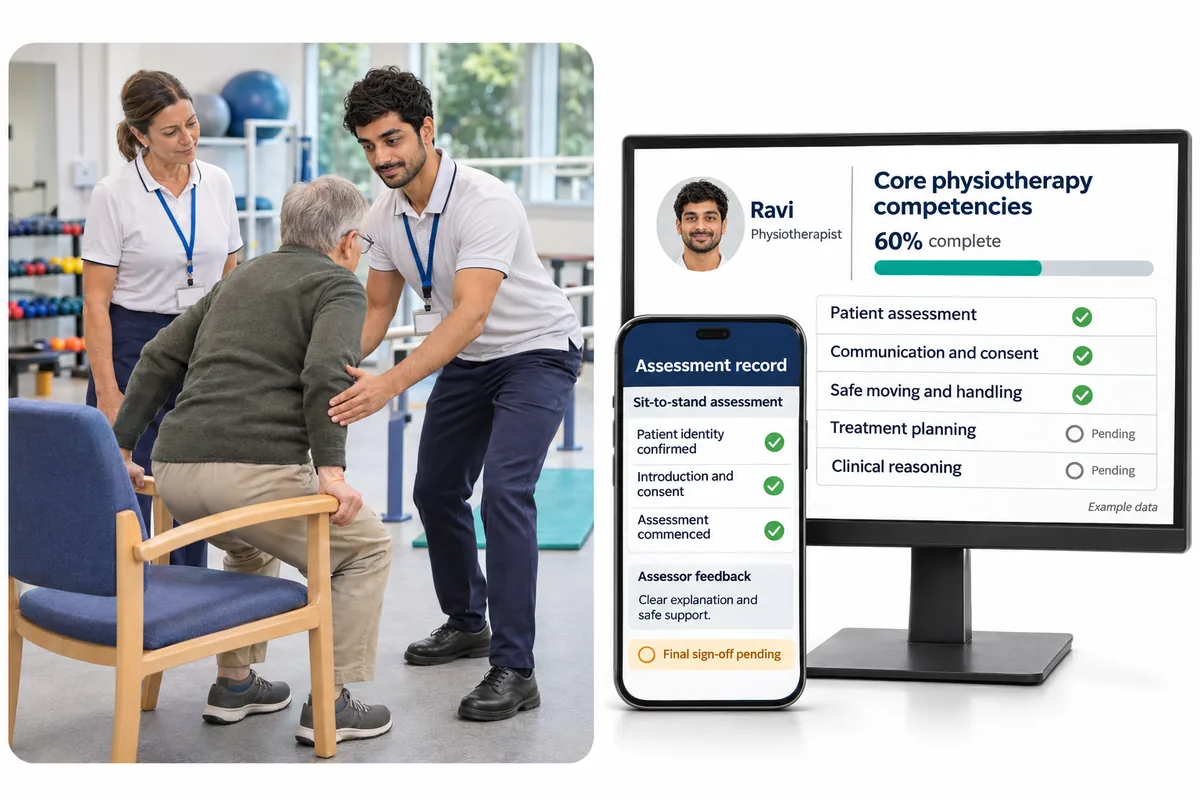
Choose an assessment approach that fits
Not every competency should be assessed in the same way. CompiTrac allows the assessment approach to reflect the competency, the expected level of practice and the workforce completing it.
One available approach is the Benner's (1984) model of clinical competence. It describes development through five levels, so organisations can record progression in practice rather than reducing every assessment to a single pass or fail decision.
Benner is one example, with other assessment approaches available according to the competency being built. Competencies can be designed for different scopes of practice, including enhanced and advanced practice. They can support nursing, midwifery, allied health professions and healthcare support roles, with the expected standard defined by your organisation.
Benner, P. (1984), From Novice to Expert: Excellence and Power in Clinical Nursing Practice.
Assessment in practice
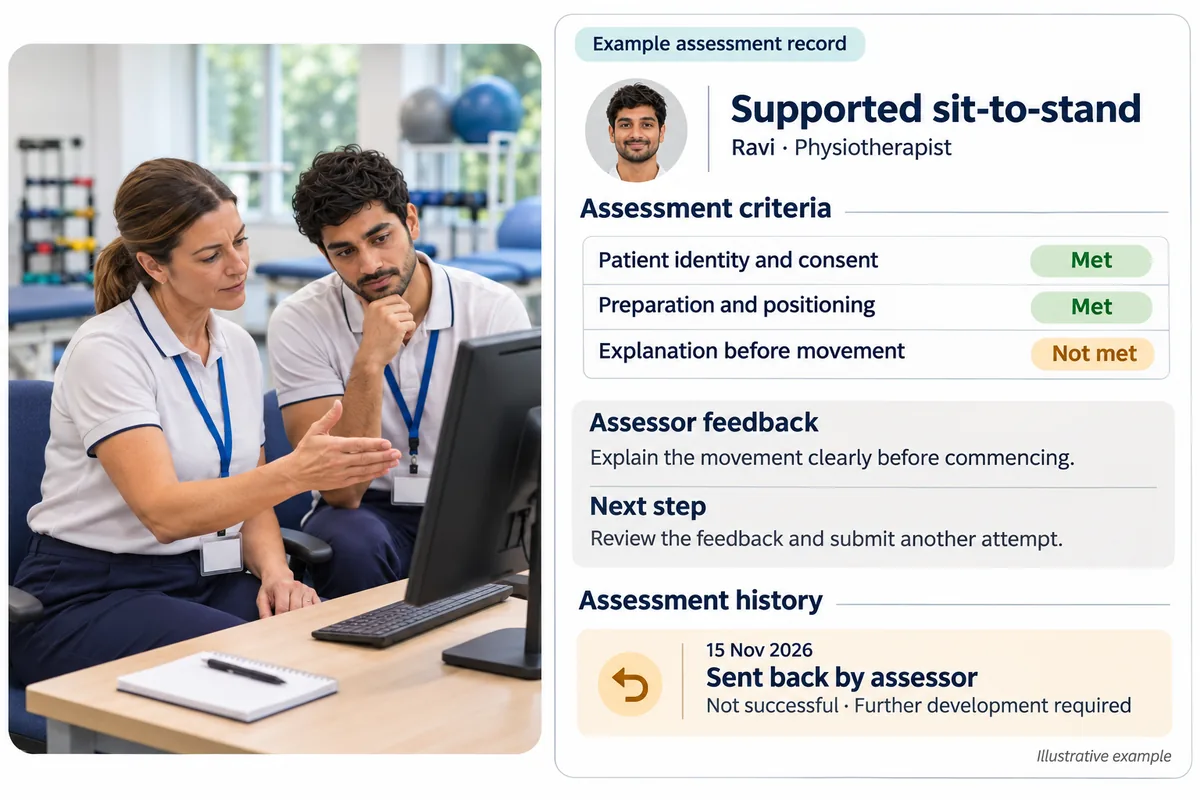
Assessment takes place against the criteria already defined within the competency. Staff record their progress and submit completed criteria to an approved assessor, who reviews the evidence against the required standard.
Assessors record their decision and provide feedback directly within the assessment record. Staff can see that feedback as soon as it is recorded, understand what requires further development and submit another attempt where needed.
Each attempt remains connected to the relevant criterion, providing a complete account of progress towards sign-off. Once the required standard has been demonstrated, the final sign-off records who made the decision and when it was completed.
Keeping assessment activity and decisions within one digital record reduces paper handling, manual chasing and the time spent reconstructing assessment histories.
Assessment records that support wider assurance
Completed assessments contribute directly to the staff record and the organisation's current view of workforce competence. The detailed reporting and assurance functions are explained on the Reporting and assurance page.